


The Burger Baba Franchise
Franchise Quick Facts
| Brand Name | The Burger Baba |
|---|---|
| Industry / Business Category | Quick Service Restaurants |
| Founded Year | 2018 |
| Franchise Started Year | 2020 |
| Total Franchise Outlets | 1–10 |
| Estimated Investment | INR 5–10 Lakh |
| Franchise Fee | INR 5,00,000 |
| Royalty Fee | Not specified; typically a percentage of revenue in QSR franchises |
| Space Requirement | 200–300 sq. ft. |
| Staff Requirement | Small-scale, including kitchen and service staff |
| Expected Payback Period | 1–2 years |
1. What is The Burger Baba?
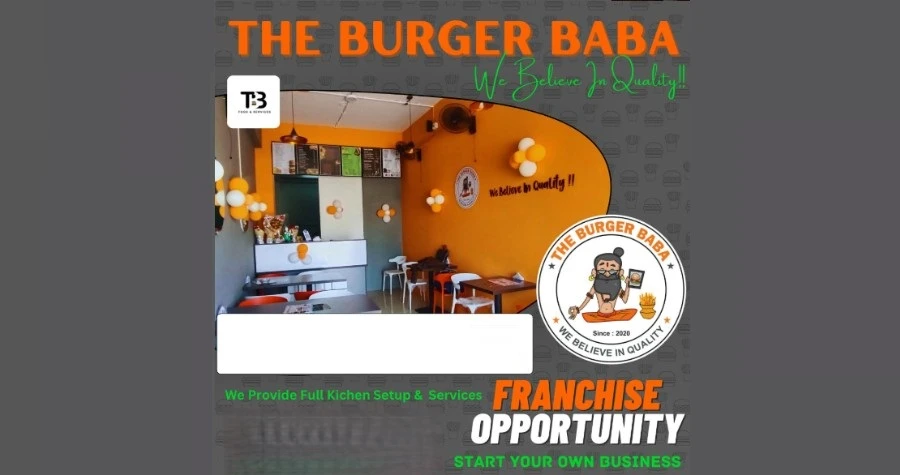
The Burger Baba is a quick-service restaurant brand in India specializing in burgers and fast-food offerings. It targets urban and semi-urban consumers seeking a convenient, consistent, and flavorful dining experience. The brand falls under the broader QSR (Quick Service Restaurant) category, combining speed, quality, and a standardized menu across outlets.
2. How the Business Works
Customers place orders for dine-in, takeaway, or delivery. Outlets operate on a standardized workflow for food preparation, service, and hygiene. Revenue is generated primarily through sales of burgers, sides, and beverages. Daily operations involve kitchen management, inventory handling, staff supervision, and maintaining quality standards.
3. Products or Services Offered
Franchise locations typically offer:
| Burgers | Veg and non-veg options prepared to consistent recipes |
|---|---|
| Wraps and Sandwiches | Complementary quick-service menu items |
| Sides | Fries, wedges, and finger foods |
| Beverages | Soft drinks and accompaniments to complete meals |
The menu is designed for fast service while maintaining taste and nutritional appeal.
4. How the Franchise Model Works
Franchise partners operate outlets under brand guidelines:
- Manage staff, daily operations, and customer service
- Maintain quality standards and hygiene protocols
- Coordinate with the franchisor for supply orders, marketing campaigns, and promotions
- Follow operational SOPs to ensure consistent customer experience
The franchisor provides guidance, training, and ongoing operational support.
5. Franchise Cost and Investment Overview
Investment components include:
| Total Investment | INR 5–10 Lakh covering outlet setup, kitchen equipment, and inventory |
|---|---|
| Franchise Fee | INR 5,00,000 for brand licensing and onboarding |
| Setup Costs | Interior design, signage, POS systems, and initial stock |
| Royalty Fee | Not specified; standard QSR franchises often charge a small revenue-based percentage |
The investment supports small-format urban and semi-urban QSR outlets.
6. Space and Infrastructure Requirements
Key requirements:
| Area | 200–300 sq. ft. |
|---|---|
| Preferred Locations | High-footfall urban streets, malls, and commercial centers |
| Equipment Needs | Cooking stations, refrigeration, display counters, storage |
| Staffing | 2–5 employees including kitchen and service personnel |
Outlets are optimized for efficient operations in limited spaces.
7. Training and Franchise Support
Franchise partners receive:
- Operational training covering kitchen management, food prep, and customer service
- Marketing guidance including local and brand-level promotions
- Supply chain coordination for ingredient procurement and inventory control
- Financial and compliance assistance including budgeting and legal guidance
- Networking opportunities with other franchisees for knowledge sharing
Support ensures partners can maintain consistent quality and operational efficiency.
8. Revenue Model and ROI Factors
Revenue is generated from:
- Core menu sales (burgers, sides, beverages)
- Add-ons and meal combos
- Dine-in, takeaway, and delivery orders
Customer retention is supported by menu variety, taste consistency, and location visibility. Expected payback period is 1–2 years, depending on location and operational efficiency.
9. Brand Background and Expansion
The Burger Baba was established in 2018 and began franchising in 2020. Current operations include a limited number of outlets, with growth focused on urban and semi-urban cities. Expansion plans aim to increase franchise presence while maintaining operational and brand standards.
10. Key Advantages of the Franchise Opportunity
- Entry into India’s fast-growing QSR segment
- Compact outlet format suitable for high-footfall areas
- Structured training, marketing, and operational support
- Scalable business model for urban and semi-urban markets
- Potential for repeat business due to standardized menu and quality
12. Similar Franchise Opportunities
- McDonald’s India
- Burger King India
- Wow! Momo (for QSR snack focus)
- KFC India
- Hardcastle Restaurants (Barbeque Nation-style casual QSR)
These brands operate within India’s fast-food or QSR segment, offering comparable operational and investment models.
Accepting franchise applications in 35 states & UTs
What is the investment required for The Burger Baba franchise?
Investment ranges from INR 5–10 Lakh, covering setup, kitchen equipment, inventory, and the franchise fee of INR 5,00,000.
How does The Burger Baba franchise business operate?
Outlets serve burgers, sides, and beverages via dine-in, takeaway, and delivery. Franchisees manage staff, operations, and customer service while following brand standards.
What space is required to start the franchise?
A space of 200–300 sq. ft. is recommended, suitable for urban streets, malls, or commercial hubs.
How long does it take to recover the investment?
Expected payback period is 1–2 years, depending on location, customer traffic, and operational management.
How can investors apply for the franchise?
Prospective franchisees contact the brand’s franchise team, submit an application, and undergo evaluation for location suitability and operational readiness. ## 12. Similar Franchise Opportunities
