



Kido Franchise
Franchise Quick Facts
| Brand Name | Kido |
|---|---|
| Industry / Category | Preschool Education & Early Learning Solutions |
| Founded Year | 1991 |
| Franchise Started | 2012 |
| Total Franchise Outlets | 500–1000 centers |
| Estimated Investment | INR 2,00,000 – 5,00,000 |
| Franchise Fee | Structured as a one-time system access and setup cost |
| Royalty Fee | Typically not structured as lifetime recurring payments in this model |
| Space Requirement | 1000 – 2000 sq. ft. |
| Staff Requirement | Team of trained teachers and support staff |
| Expected Payback Period | 1–2 years |
1. What is Kido?
Kido is a preschool education solutions provider operating in the early childhood learning segment, offering curriculum systems, Montessori materials, training programs, and operational support for setting up and managing preschool centers.
The Kido franchise model falls within the preschool and education services category, focusing on enabling entrepreneurs to establish and operate their own preschool using structured academic and operational frameworks.
2. How the Business Works
The business operates as a preschool center delivering structured early education programs to children through a combination of curriculum, learning materials, and guided classroom activities.
Operational flow includes
- Parents enroll children in early learning programs
- Teachers deliver daily sessions using structured curriculum and Montessori-based tools
- Children participate in activity-driven learning rather than passive instruction
- Periodic assessments track development and learning outcomes
Revenue is primarily generated through:
- Admission and registration fees
- Monthly or term-based tuition
- Value-added educational services or materials
The model emphasizes consistent academic delivery supported by predefined systems rather than ad-hoc teaching approaches.
3. Products or Services Offered
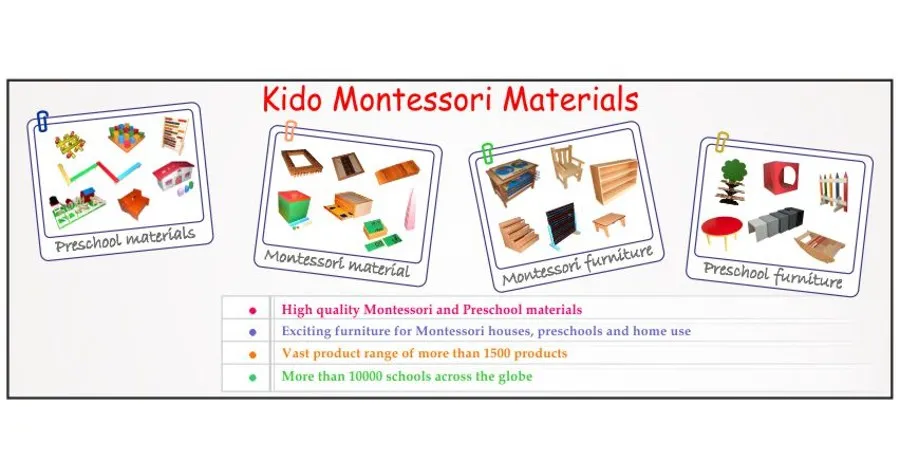
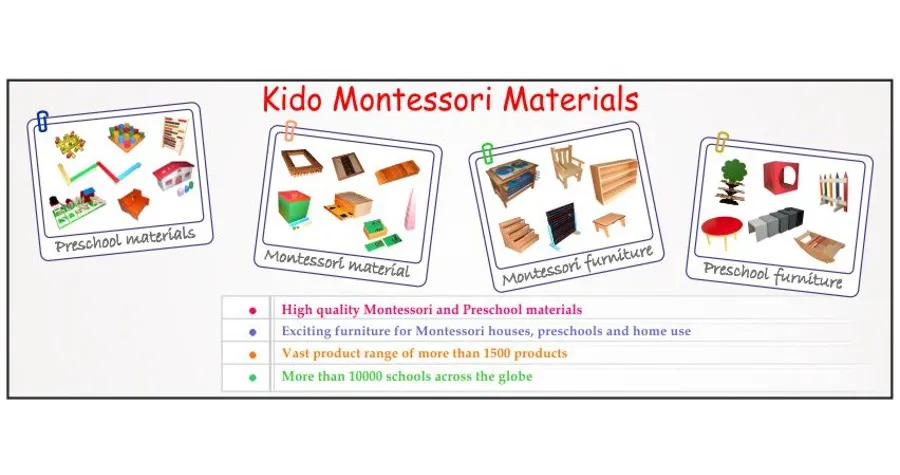
Kido provides a range of educational systems and physical infrastructure designed for preschool operations.
Main categories include
- Structured Curriculum Systems
Designed for early childhood education with defined learning outcomes and teaching sequences.
- Montessori Materials (Premium and Budget Ranges)
Learning tools supporting sensory development, motor skills, and conceptual understanding across age groups.
- Custom Educational Learning Aids
Supplementary materials used in preschools, kindergartens, and special education environments.
- School Furniture and Classroom Setup Solutions
Age-appropriate furniture including desks, chairs, and activity-based infrastructure.
- Assessment and Evaluation Tools
Software systems for tracking student progress across learning parameters.
These components are integrated into the daily functioning of franchise centers.
4. How the Franchise Model Works
The model operates as a system-based preschool setup where the franchise partner runs an independently managed center using the brand’s educational framework.
Franchise partner role
- Establish and manage the preschool center
- Recruit and manage teaching staff
- Execute curriculum and classroom activities
- Handle admissions and parent engagement
Franchisor role
- Provide curriculum, materials, and operational systems
- Offer training and academic guidance
- Support marketing and enrollment strategies
- Provide ongoing academic consultation
The structure allows entrepreneurs to build and operate their own preschool identity while using standardized educational systems.
5. Franchise Cost and Investment Overview
The estimated investment ranges from INR 2 lakh to INR 5 lakh, covering essential setup and operational requirements.
Typical cost components include
- Educational materials and curriculum kits
- Classroom furniture and infrastructure
- Training and onboarding support
- Initial marketing and setup expenses
Unlike many franchise models, ongoing royalty structures may not be emphasized, with the focus placed on a one-time investment and continued academic support.
6. Space and Infrastructure Requirements
The preschool setup requires a moderate-sized facility designed for child safety and interactive learning.
Key requirements
- Area between 1000 and 2000 sq. ft.
- Dedicated classrooms and activity areas
- Child-friendly interiors and safety measures
- Storage for learning materials and equipment
Staffing needs
- Qualified teachers trained in early childhood education
- Assistants for classroom support and child supervision
Residential areas and neighborhoods with young families are typically suitable locations.
7. Training and Franchise Support
Kido provides structured support aimed at enabling first-time operators to manage preschool operations.
Support includes
- Video-based teacher training programs
- Guidance on curriculum implementation and material usage
- Assistance in school layout planning
- Marketing support through parent engagement activities
- Continuous academic support through query-based assistance
This system reduces dependency on prior experience in education management.
8. Revenue Model and ROI Factors
Revenue is generated through enrollment-driven income streams.
Primary revenue sources
- Admission fees and registration charges
- Monthly tuition fees
- Additional services or educational offerings
ROI factors
- Payback period estimated at 1–2 years
- Enrollment capacity and retention directly influence returns
- Cost control in staffing and operations impacts profitability
The model relies on stable student intake and consistent academic delivery.
9. Brand History and Expansion
Kido began operations in 1991 and entered the franchise segment in 2012.
The organization has expanded significantly, with 500 to 1000 preschool setups supported across multiple regions and international markets.
Experience across more than 20 countries contributes to the development of standardized systems and operational frameworks used by franchise partners.
10. Key Advantages of the Franchise
- Established presence in the preschool education segment
- Structured systems reduce operational uncertainty
- One-time investment model lowers long-term financial commitments
- High demand for early childhood education services
- Scalable model suitable for urban and semi-urban locations
- Ongoing academic and operational support
11. Who Should Consider This Franchise
This opportunity may suit:
- First-time entrepreneurs entering the education sector
- Individuals interested in running a preschool business
- Investors seeking a moderate-investment service business
- Educators aiming to establish their own learning center
- Operators looking for system-driven business models
Similar Franchise Opportunities
Entrepreneurs exploring this segment may also evaluate:
- EuroKids
- Kidzee
- Bachpan Play School
- Little Millennium
- Hello Kids
These brands operate within the same preschool and early education category and offer comparable franchise-based business models for evaluation.
What is the investment required for Kido franchise?
The estimated investment ranges between INR 2 lakh and INR 5 lakh. This includes curriculum materials, classroom setup, and initial operational support required to establish a preschool center.
How does the Kido franchise business work?
The franchise operates as a preschool using structured curriculum systems, learning materials, and training support. The owner manages daily operations while following standardized teaching and administrative processes.
What space is required for the franchise?
A space between 1000 and 2000 sq. ft. is generally required. The facility should accommodate classrooms, activity zones, and child-friendly infrastructure suitable for early learning environments.
How long does it take to recover the investment?
The expected payback period is approximately 1 to 2 years. Returns depend on student enrollment levels, fee structure, and operational efficiency of the center.
How can investors apply for the franchise?
Interested individuals can apply through official business channels or franchise enquiry platforms. The process typically involves evaluating location suitability, investment readiness, and alignment with operational requirements before onboarding. ## Similar Franchise Opportunities
