



Asli Irani Franchise
Franchise Quick Facts
| Brand Name | Asli Irani |
|---|---|
| Industry / Business Category | Tea & Coffee / Café |
| Founded Year | 2024 |
| Franchise Started Year | 2024 |
| Total Franchise Outlets | 20 to 50 |
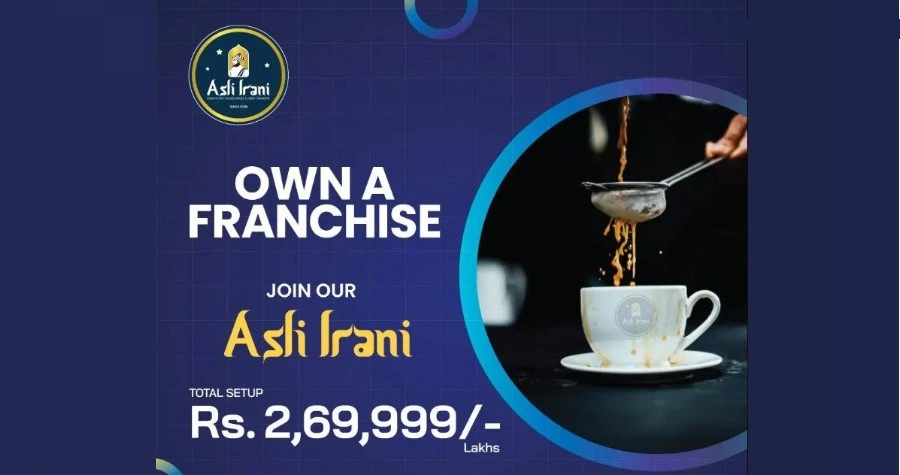
| Estimated Investment | ?2 lakh – ?5 lakh |
| Franchise Fee | Not specified |
| Royalty Fee | Not specified |
| Space Requirement | 100 – 200 sq. ft. |
| Staff Requirement | Small service team (not specified) |
| Expected Payback Period | 1 – 2 years |
1. What is Asli Irani?
Asli Irani is a café franchise brand operating in the tea and coffee segment, offering Irani-style chai, bakery items, and café snacks through compact retail outlets.
The business is positioned in the quick-service café category, serving customers looking for traditional tea-based beverages and light food items. It caters to daily consumers, including students, office-goers, and walk-in café visitors.
2. How the Business Works
The business operates as a small-format café focused on quick service and repeat consumption.
A typical customer journey includes:
- Visiting the outlet for tea and snacks
- Selecting items such as chai, bun maska, or bakery products
- Quick preparation and serving at the counter
- Immediate consumption or takeaway
Daily operations include:
- Brewing tea using standardized methods
- Preparing and serving snacks
- Managing customer flow and service speed
- Handling billing and inventory
Revenue is generated through high-frequency sales of beverages and food items, supported by repeat visits.
3. Products or Services Offered
The menu combines traditional café offerings with complementary food items.
Beverage Offerings
- Irani-style chai
- Tea-based drinks
Bakery and Snack Items
- Bun maska and similar bakery products
- Cookies and light snacks
Café-Style Food
- Quick-serve items suited for short visits
- Add-on snacks paired with beverages
Additional Offerings
- Seasonal or limited-time menu items
- Catering or event-based service extensions
The product mix supports both individual purchases and repeat daily consumption.
4. How the Franchise Model Works
The franchise model is designed around small café outlets with standardized operations.
Role of the Franchise Partner
- Invest in outlet setup
- Operate the café on a daily basis
- Manage staff, service quality, and customer experience
- Execute local marketing and promotions
Outlet Operations
- Compact café format with quick service
- Focus on high customer turnover
- Standardized recipes and service processes
Franchisor–Franchisee Interaction
- Provides operational guidelines and product standards
- Supports brand consistency across locations
- Assists with ongoing business coordination
5. Franchise Cost and Investment Overview
The investment level is structured for small-scale café operations.
Estimated Investment
- ?2 lakh to ?5 lakh
Cost Components
- Outlet setup and interior design
- Basic kitchen and serving equipment
- Initial raw material and inventory
- Branding and signage
- Working capital
Fees
- Franchise fee and royalty details are not specified
This structure allows entry into the café segment with relatively low capital requirements.
6. Space and Infrastructure Requirements
The business operates in a compact retail format.
Space Requirement
- 100 to 200 sq. ft.
Infrastructure Needs
- Tea preparation and serving area
- Counter for order and billing
- Basic seating or takeaway setup
Location Preferences
- High footfall areas such as markets, streets, and commercial zones
- Locations near colleges, offices, or transit areas
Staffing
- Small team for preparation and service
- Counter staff for customer handling
7. Training and Franchise Support
Support focuses on maintaining consistency in product and service delivery.
Training Support
- Preparation of tea and food items
- Customer service and operational workflow
Operational Support
- Standardized processes for outlet management
- Guidance on maintaining brand experience
Marketing Support
- Brand-level positioning and visibility
- Assistance in local promotions
These systems help franchise partners operate efficiently while maintaining consistent customer experience.
8. Revenue Model and ROI Factors
Revenue is generated through daily café sales.
Key Revenue Streams
- Tea and beverage sales
- Bakery and snack items
- Combo offerings
Demand Drivers
- Daily consumption of tea in urban and semi-urban areas
- Affordable pricing encouraging repeat visits
- High footfall locations driving volume
ROI Considerations
- Expected payback period: 1 to 2 years
- Profitability depends on location, customer volume, and operational efficiency
- Repeat customers contribute significantly to revenue stability
9. Brand History and Expansion
The brand was established in 2024 and began franchising in the same year.
It has expanded to 20 to 50 outlets across multiple regions and is continuing to grow through franchise partnerships in new markets.
10. Key Advantages of the Franchise
- Operates in a high-frequency tea consumption category
- Compact outlet model with low space requirement
- Repeat customer potential due to daily consumption habits
- Scalable across urban and semi-urban locations
- Simple operations with standardized menu
- Expanding brand presence across multiple regions
Accepting franchise applications in 35 states & UTs

What is the investment required for Asli Irani franchise?
The estimated investment ranges between ?2 lakh and ?5 lakh, covering setup, equipment, and initial working capital.
How does the Asli Irani franchise business work?
The business operates as a small café serving tea and snacks. Franchise owners manage daily operations, while the brand provides standardized processes and support.
What space is required for this franchise?
A compact area of 100 to 200 sq. ft. is sufficient to operate the outlet effectively.
How long does it take to recover the investment?
The expected payback period is approximately 1 to 2 years, depending on location performance and sales volume.
How can investors apply for the franchise?
Interested individuals can apply by contacting the brand directly and completing the franchise onboarding and evaluation process.
