

Kale Organic Hub Franchise
Brand & Franchise Snapshot
| Brand Name | Kale Organic Hub |
|---|---|
| Industry | Organic Retail & Grocery (Health & Wellness Retail) |
| Founded | 2025 |
| Franchise Started | 2025 |
| Franchise Outlets | 1–10 |
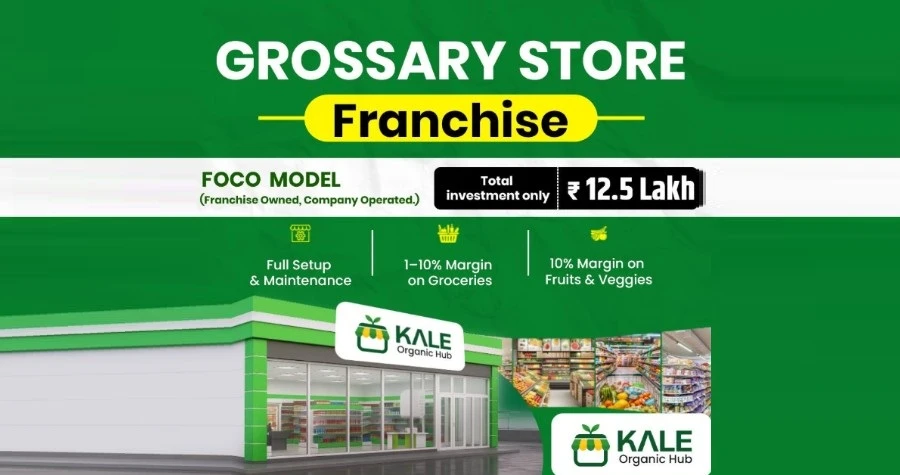
| Estimated Investment | INR 10 Lakh – 20 Lakh |
| Franchise Fee | Typically covers brand licensing, onboarding, and operational setup |
| Royalty Fee | Generally structured as a percentage to support supply chain, branding, and system access |
| Space Requirement | 200 – 300 sq. ft. |
| Staff Requirement | 3–6 employees |
| Expected Payback Period | 1–2 years |
1. What is Kale Organic Hub?
Kale Organic Hub is an organic grocery and wellness retail concept operating in the health-focused supermarket segment, offering organic food products, eco-friendly household items, and natural personal care solutions.
It falls within the organic retail franchise category, serving health-conscious consumers seeking chemical-free, sustainably sourced daily essentials.
2. How the Business Works
The model operates as a curated organic retail store with integrated digital and subscription-based purchasing options.
Customer Journey
- Customers visit the store or browse via app
- Products are selected based on dietary preferences or lifestyle needs
- Staff or in-store tools assist with product understanding
- Purchases are completed in-store or through delivery systems
Operational Workflow
- Procurement from certified organic suppliers
- Inventory management of perishable and packaged goods
- In-store merchandising by product category and lifestyle segments
- Integration with digital ordering systems
Revenue Generation
- Retail sales of organic groceries and wellness products
- Higher-margin private-label goods
- Repeat purchases through subscriptions and loyalty programs
3. Products or Services Offered
The offering is structured across multiple organic lifestyle categories.
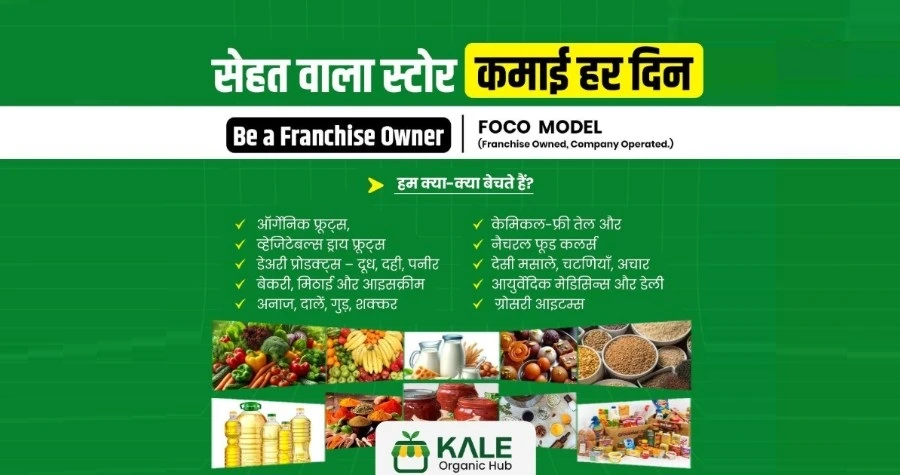
Food & Grocery
- Organic fruits and vegetables
- Staples such as grains, pulses, and oils
- Natural sweeteners and minimally processed foods
Ready-to-Eat & Beverages
- Fresh juices and smoothies
- Ready-to-eat healthy meals and snacks
- Bakery items made with alternative ingredients
Personal Care & Wellness
- Herbal supplements and teas
- Natural skincare and hygiene products
Household & Lifestyle
- Eco-friendly cleaning supplies
- Sustainable packaging alternatives
Specialized Segments
- Baby and kids’ organic products
- Pet wellness products
4. Franchise Structure and Operating Model
The franchise follows a retail-led distribution model supported by centralized sourcing and brand systems.
Franchise Partner Role
- Operate the retail outlet
- Manage inventory and customer experience
- Drive local marketing and customer engagement
Franchisor Role
- Provide supplier network and product sourcing
- Offer branding, store design, and merchandising guidelines
- Support technology systems and inventory tools
- Enable training and operational processes
This structure allows franchisees to focus on retail execution while sourcing and brand positioning are standardized.
5. Franchise Cost and Investment
The investment level reflects a premium grocery retail setup with curated product sourcing.
Key Investment Components
- Franchise fee and onboarding
- Store interiors aligned with brand design
- Initial inventory of organic products
- Technology systems for billing and inventory
Ongoing payments typically contribute to supply chain management, digital platforms, and brand development.
6. Space and Setup Requirements
The format is designed for compact, high-efficiency retail outlets.
Space Details
Area: 200 – 300 sq. ft.
- Suitable for residential neighborhoods or urban retail clusters
Setup Requirements
- Organized shelving for multiple product categories
- Refrigeration for perishable goods
- Billing and inventory systems
Staffing
- Store manager
- Sales associates with product knowledge
7. Training and Franchise Support
Support systems are focused on product knowledge and retail operations.
Training Includes
- Understanding organic certifications and product categories
- Customer advisory for health-based purchases
- Inventory and waste management practices
- Use of digital systems and POS tools
Ongoing Support
- Supplier coordination
- Marketing campaigns and brand communication
- Product updates and category expansion
These systems help maintain consistent product standards and customer experience.
8. Revenue Model and ROI Factors
Revenue is driven by high-frequency purchases and repeat customer behavior.
Revenue Drivers
- Daily grocery consumption
- Increasing demand for organic and chemical-free products
- Subscription-based buying patterns
- Premium pricing for certified products
ROI Considerations
- Smaller store format reduces fixed costs
- Higher margins on niche and private-label items
- Repeat customers improve long-term stability
The expected payback period ranges between one and two years depending on location and customer retention.
9. Brand Background and Expansion
Kale Organic Hub was established in 2025 with a focus on building a modern organic retail ecosystem.
The franchise model is being introduced early in its lifecycle to expand into urban and semi-urban markets using smaller-format stores.
10. What Makes This Franchise Different
The concept integrates organic retail with technology-driven personalization and sustainability tracking, which is not typical in conventional grocery stores.
Instead of functioning as a standard supermarket, the model emphasizes traceability, curated sourcing, and lifestyle-based merchandising, positioning it closer to a wellness platform than a traditional retail outlet.
11. Key Advantages of the Franchise
- Rising consumer demand for organic and clean-label products
- Compact store format with controlled operational costs
- High repeat purchase potential due to grocery nature
- Access to centralized sourcing and verified suppliers
- Opportunity to build a niche customer base in health retail
- Scalability through multiple small-format outlets
12. Who Should Consider This Franchise
This opportunity may suit:
- First-time entrepreneurs entering retail
- Investors interested in health and wellness businesses
- Retail operators seeking a niche grocery format
- Entrepreneurs targeting urban residential markets
- Individuals interested in sustainable and eco-conscious businesses
Frequently Asked Questions
What is the investment required for Kale Organic Hub franchise?
The investment typically ranges between INR 10 lakh and 20 lakh. This includes store setup, initial inventory, franchise onboarding, and working capital required to operate the outlet effectively in the organic retail segment.
How does the Kale Organic Hub franchise business operate?
The business operates as a retail store selling organic groceries and wellness products. Franchisees manage store operations and customer engagement, while sourcing, branding, and system support are handled centrally by the brand.
What space is required for the franchise?
A compact retail space of around 200 to 300 sq. ft. is required. The store is designed for efficient product display and quick customer movement, making it suitable for high-density residential or urban areas.
How long does it take to recover the investment?
The expected payback period is approximately one to two years. Recovery depends on store location, repeat customer base, and effective inventory management, especially for perishable organic products.
How can investors apply for the franchise?
Investors can apply by contacting the brand, completing onboarding formalities, setting up the store as per guidelines, and launching operations with training and support provided by the company.
Similar Franchise Opportunities
Entrepreneurs exploring organic retail and grocery franchises may also consider:
- Organic India
- 24 Mantra Organic
- Nature’s Basket
- BigBasket
- Reliance Fresh
These brands operate in the broader grocery and organic product segment, offering comparable retail-driven business models.
Accepting franchise applications in 36 states & UTs